
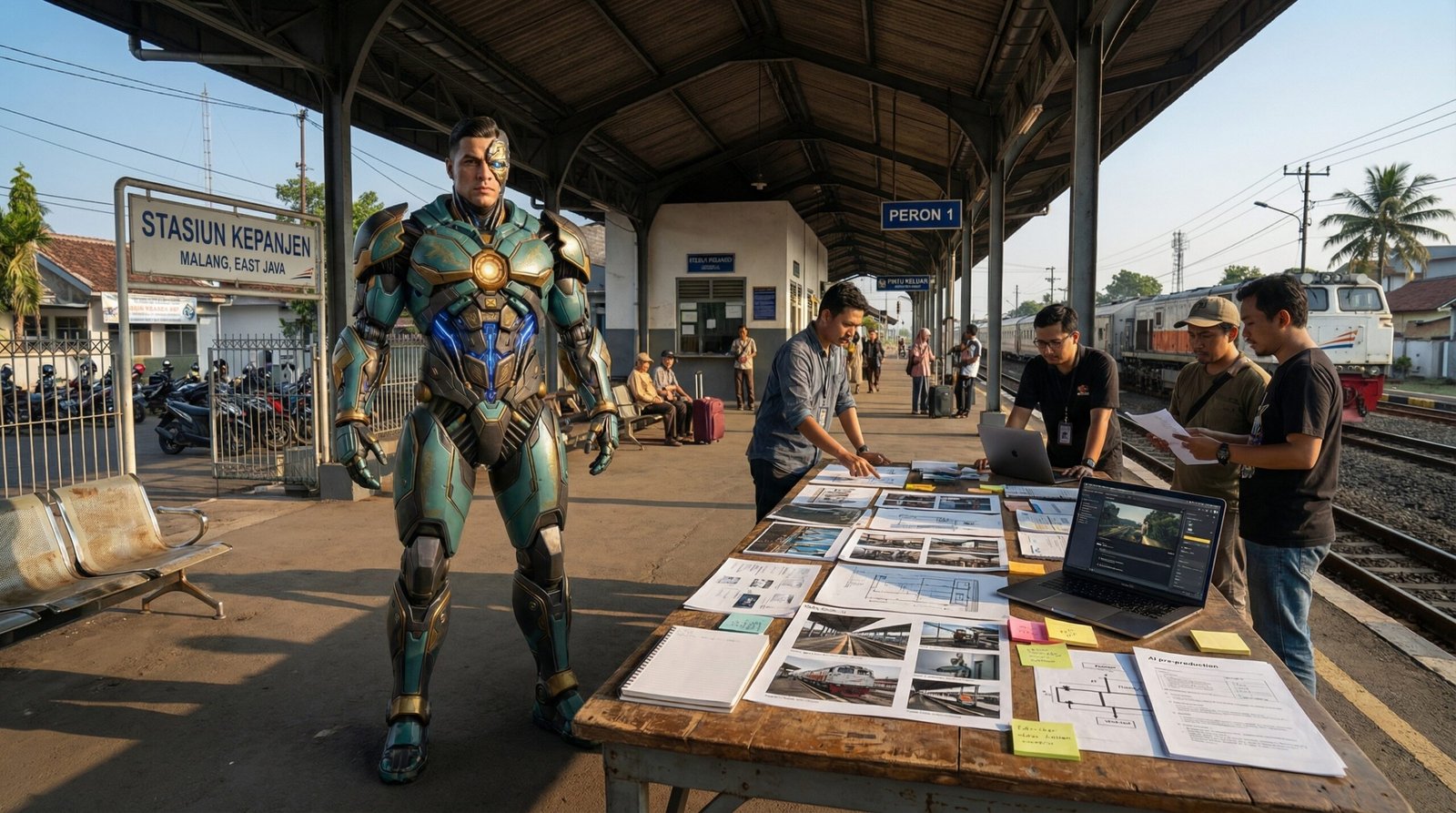
The 5 Core Elements of AI Content Planning Before Execution

AI content planning elements define the structure that should exist before prompts, references, and execution begin. Many creators move too quickly into tools and generation, but strong AI workflows depend on planning first. Without that structure, AI outputs often become inconsistent, fragmented, and difficult to scale.
1. AI Content Planning Elements: Intent Definition
Creators should begin every AI-generated output with a clear purpose. A creator must define what is being made, why it needs to exist, and who it is meant to serve. Without this level of clarity, AI can produce content that appears polished but remains strategically empty. Intent gives the project direction and becomes the reference point for every decision that follows.
2. Narrative Scope
Once intent is clear, the next requirement is scope. A creator must determine the boundaries of the content before production starts. This includes format, duration, emotional tone, audience expectation, and the scale of the output. Scope defines how large or small the project actually is. When scope is weak, AI outputs can quickly drift away from the original objective and create disjointed storytelling or inconsistent presentation.
3. Structural Constraints
Constraints are often misunderstood as restrictions. In reality, they create coherence. Structural constraints define what must remain stable across the content. Creators may define character identity, scene continuity, stylistic rules, environmental logic, or visual limitations to preserve consistency. Without constraints, AI introduces variation too easily, and the project slowly loses its internal logic.
4. AI Content Planning Elements: Reference Anchors
After creators define intent, scope, and constraints, they need anchors. Reference anchors provide the visual and structural material that helps AI outputs stay aligned over time. Creators can use character references, scene references, lighting references, mechanical references, or other assets to stabilize decision-making before generation begins. Without anchors, creators rely too heavily on interpretation in every generation.
5. Execution Logic
Creators should introduce execution logic only after they define the previous four elements. Execution logic determines how the work will actually move through production. It clarifies order, dependencies, checkpoints, and revision flow. This is what turns AI from a generator of isolated outputs into part of a controlled production system.
Why AI Content Planning Elements Matter
AI Content Planning Elements and Long-Term Consistency
AI content planning elements support long-term consistency because they create stable rules before production begins. Instead of relying on random outputs, creators can use intent, scope, constraints, references, and execution logic to maintain quality across multiple iterations.
These five elements are not abstract theory. Together, they form the pre-production architecture behind consistent AI-driven content. When creators skip this architecture, they often encounter the same problems: inconsistent characters, unstable visual language, fragmented storytelling, unclear revisions, and outputs that cannot be scaled with confidence. This planning-first approach also reflects how traditional pre-production disciplines define structure before execution.
Final Thought
AI content planning should not be treated as a secondary layer added after generation begins. It should come first. Creators should define these AI content planning elements before they write the first prompt, render the first visual, or activate any production workflow.
These AI content planning elements create the foundation for clarity, consistency, and control before any AI system is used for production.
On Indera.Digital, these principles connect directly with Content Planning, the Reference Library, and Frameworks as part of a unified pre-production system.
Creators who want to build more structured workflows can also explore the Content Planning page, the Reference Library, and Frameworks on INDERA DIGITAL.
Curated by

INDERA DIGITAL is curated by Anton Roringpande, a cinematic AI creator focused on structured content planning, visual consistency, and system-driven workflows.
Anton’s role is not to teach tools, but to curate frameworks, references, and decision systems that help creators work with clarity and control.
Leave a Reply